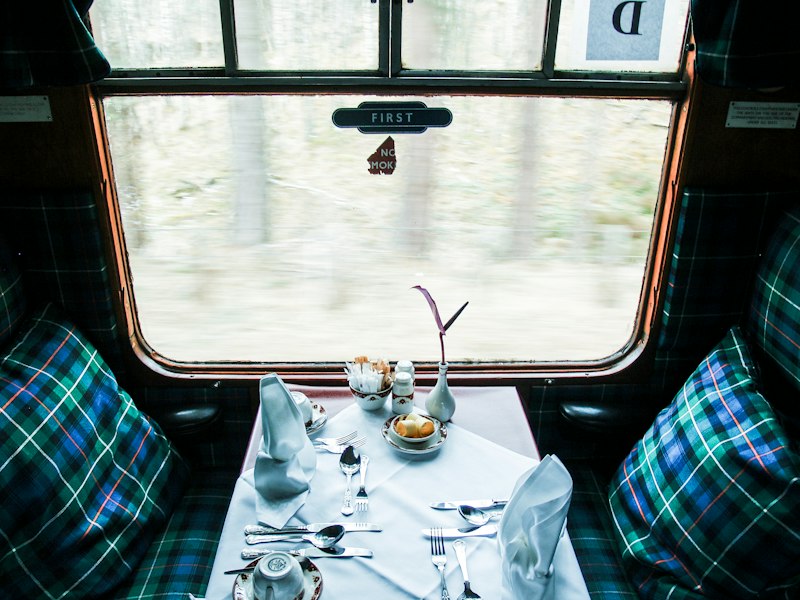
Private butlers, black tie dinners, and marble bathrooms on rails. A guide to the most luxurious train journeys in the world, from the Venice Simplon-Orient-Express to the Maharajas' Express, Rovos Rail, and Japan's near-impossible Seven Stars, with approximate fares and how to actually book them.
The most luxurious train journeys in the world are not really about getting anywhere. They are about the days in between: a butler who knows how you take your coffee, a four course dinner on linen while the Alps slide past the window, and a cabin that costs more per night than most hotels charge per week. This guide covers the Venice Simplon-Orient-Express and the rest of the great luxury train Europe routes, the luxury trains in India that still travel like the princely states, Rovos Rail and the Blue Train in South Africa, Japan’s lottery-only sleepers, and the high Andes of Peru.
Fares below are approximate, usually per person based on two sharing a cabin, and they move with exchange rates, season, and demand. Treat them as a sense of scale, not a quote.
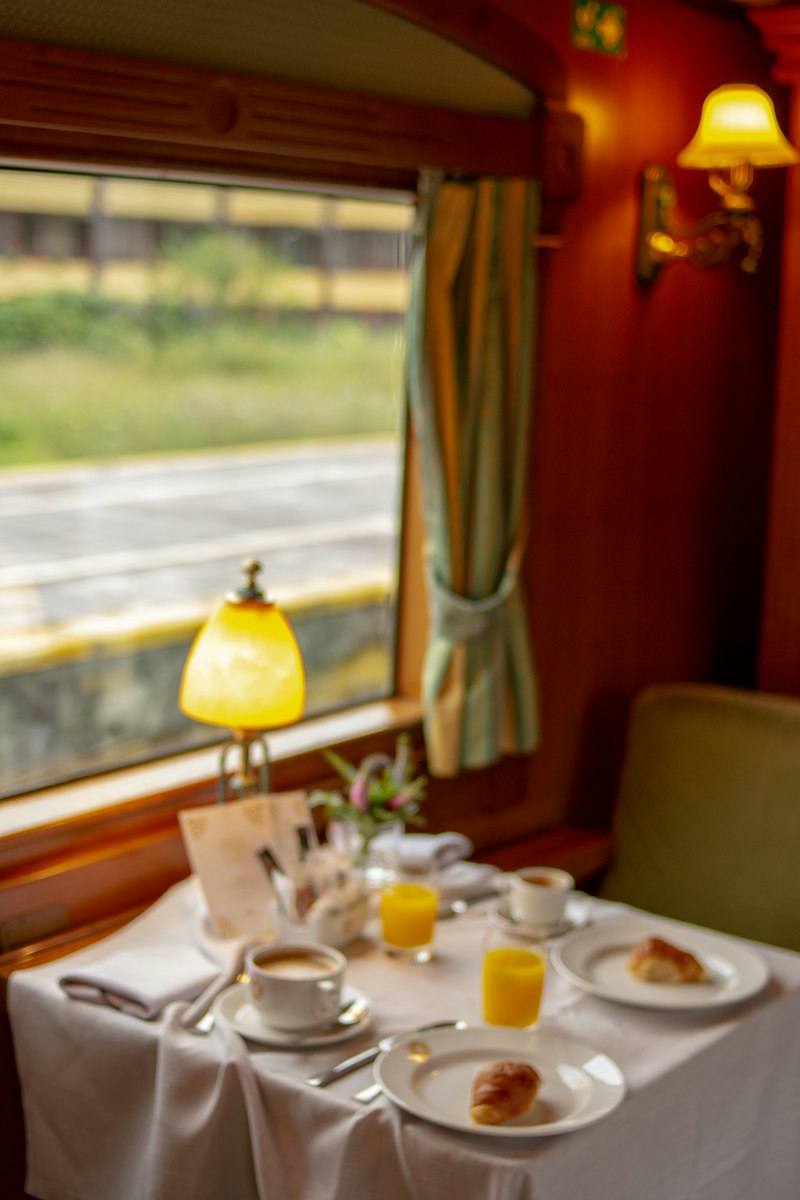
Almost every train here is all inclusive in a way cruise ships rarely are: the cabin, every meal, most or all drinks, the guided off-train excursions, and the staff. The gap between a mid tier cabin and a top suite is space, a private bathroom, and the level of service, meaning a steward shared with the carriage or a butler who is yours alone and handles unpacking, pressing, in-cabin dining, and a bell you can ring at three in the morning.
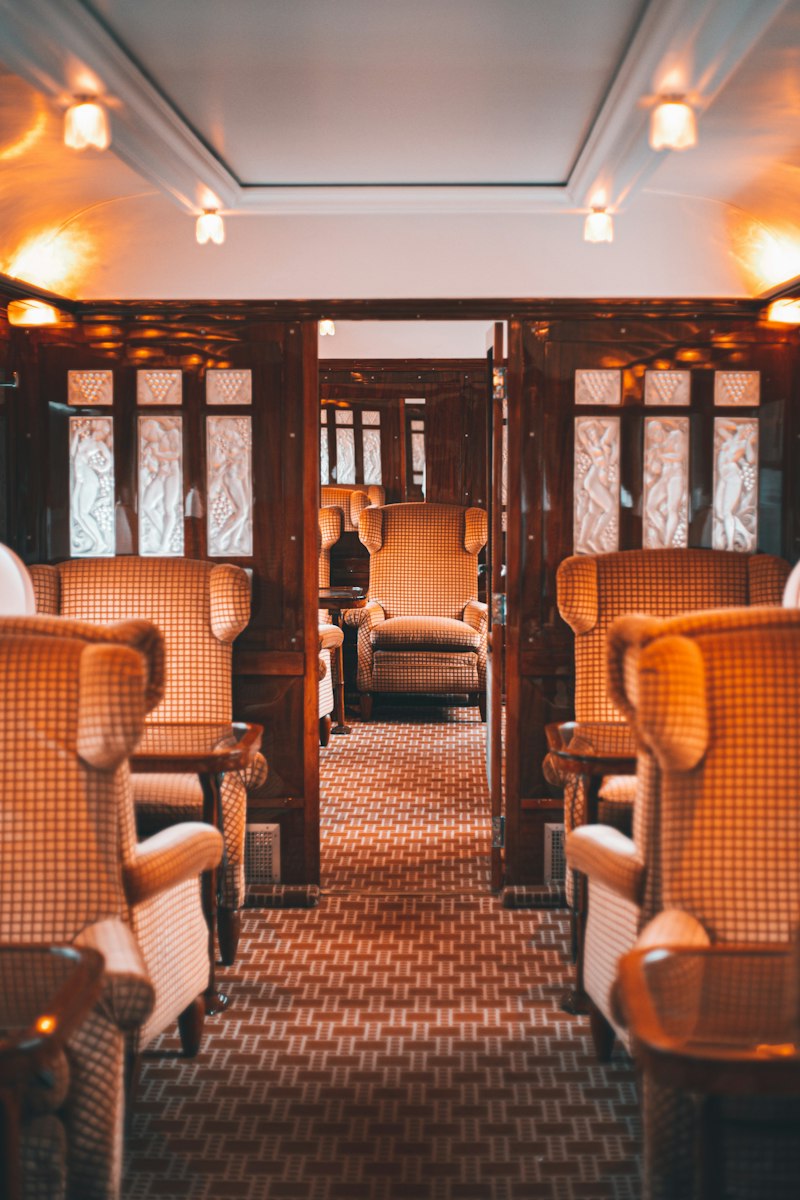
Run by Belmond, this is the one everybody pictures: restored 1920s sleeper carriages, marquetry panels, a pianist in the bar car, and a dress code people genuinely dress for.
Routes. Belmond lists journeys to more than 15 European cities. The classic is the overnight Paris to Venice run, a single night on board; Vienna to Paris, Paris to Florence, and Brussels to Venice are also one night. Longer options include Paris to Portofino and Paris to the Amalfi Coast (3 nights each), a new Paris to Monaco route, and the five night Istanbul to Paris epic. The season runs roughly March to December.
Cabins. There are 32 Historic Cabins, 16 Suites, 6 Grand Suites, and L’Observatoire, a sleeper carriage designed by the artist JR. Historic Cabins are small by design, with a washbasin and shared facilities at the end of the carriage; Suites and Grand Suites have private bathrooms.
The Grand Suites. The six named after European cities (Paris, Venice, Istanbul, Vienna, Budapest, Prague) come with 24 hour private butler service, free flowing champagne, caviar, private in-cabin dining, and private transfers to and from your hotel.
Approximate fares. For the one night Paris to Venice journey, 2026 published rates start around £4,275 per person in a twin Historic Cabin, about £9,660 in a Suite, and £13,530 in a Grand Suite, including a champagne reception, four course dinner, brunch, and breakfast.
Dress code. Belmond’s own guidance is blunt: formal evening attire for dinner, with many guests in black tie, smart daywear otherwise, and “jeans are not acceptable at any time.” Luggage is limited to one hand bag, one overnight bag, and one suitcase for the baggage car.
Royal Scotsman, A Belmond Train. Scotland’s country house on rails carries just 36 guests in 18 cabins, which is why it sells out. There are Grand Suites (about 14 square metres), Double Cabins, and Twin Cabins, plus the first permanent Dior Spa on a train, opened on board in 2023. Itineraries run from 2 to 7 nights, all round trip from Edinburgh Waverley, including the Scotch Malt Whisky Tour and the 7 night Grand Tour of Scotland, with days spent on included excursions to distilleries, castles, and private estates. The 2 night journeys start around £5,850 per person, rising to about £7,050 for the ones hosted by a guest chef, and the Grand Tour runs well into five figures. Belmond prices dynamically, so these are starting points. Grand Suites add a personal butler, free flowing champagne, a spa treatment, and private transfers.
Belmond British Pullman. The cheapest way onto a Belmond train: a day train with no sleeping cabins, running round trip excursions out of London Victoria in 12 Art Deco carriages from the 1920s and 1930s. Journeys include a Murder Mystery Lunch, The Golden Age of Travel by Steam, and Historic Bath, with fares that move with demand, starting around £430 to £500 per person on quieter dates and running to £535 and well above for the signature journeys, all including champagne and a multi course lunch. The Orient-Express feeling for a few hundred pounds instead of several thousand.
India is where luxury rail gets theatrical, and where butler service is most generous.
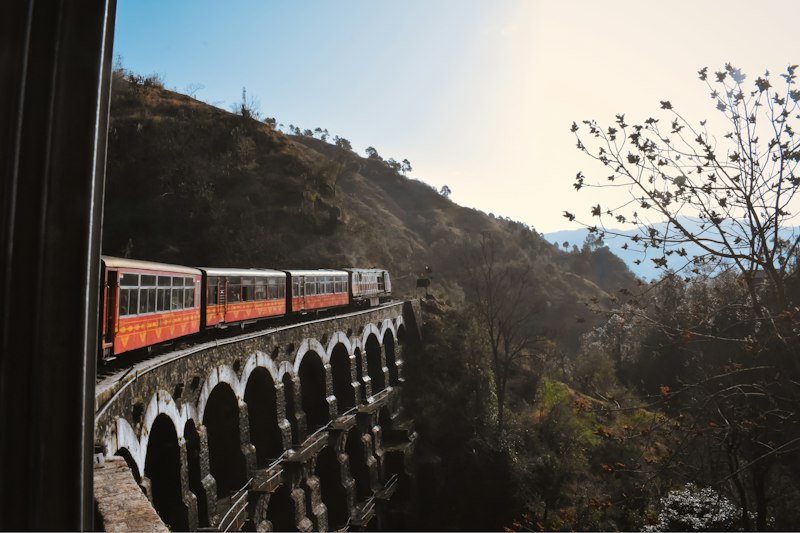
Maharajas’ Express. Operated by IRCTC, this is India’s most expensive train. Twenty three carriages hold Deluxe Cabins, Junior Suites, Suites, and a single Presidential Suite, Navratna, that fills its own carriage. Every guest gets a personal attendant (the khidmatgar, or butler); the Presidential Suite gets a dedicated 24 hour butler and a private vehicle with a guide for every excursion.
Four itineraries run from October to April: Treasures of India (3 nights, Delhi to Agra, Ranthambore, and Jaipur), plus three 6 night routes taking in Udaipur, Jodhpur, Bikaner, Khajuraho, Varanasi, and Mumbai.
Approximate 2026 to 2027 fares per person twin sharing: around $5,300 in a Deluxe Cabin for the 3 night trip, roughly $8,400 to $8,800 for the 6 night journeys, about $10,700 to $11,200 in a Junior Suite, around $15,600 in a Suite, and about $26,800 for the Presidential Suite. That covers all meals, soft drinks, house wines, beer and spirits, butler service, porterage, and every guided excursion with entrance fees.
Palace on Wheels. The original, run by Rajasthan Tourism with Indian Railways: a 7 night loop out of Delhi through Jaipur, Jaisalmer, Jodhpur, Udaipur, Ranthambore, and Agra, with personal attendants assigned to each coach. Rajasthan Tourism publishes its tariff openly, which is refreshing. For 2026 to 2027, peak months (October to March) are about USD 976 per person per night in a Deluxe Cabin on double occupancy. The Suites and the Presidential Suite are priced per cabin rather than per person, at roughly USD 2,748 and USD 3,510 per night. September and April are cheaper, GST is extra, and festive departures carry a 10 percent surcharge.
Deccan Odyssey. The Maharashtra option, running roughly September through May on week long itineraries out of Mumbai and Delhi under names like Indian Odyssey and Maharashtra Splendour. It is usually the softest landing of the three on price, but its schedule has shifted in recent years, so confirm departure dates with the operator.
Rovos Rail. The Pride of Africa carries a maximum of 72 guests in 36 suites: Pullman (about 7 square metres), Deluxe (about 10, with a shower), and Royal Suites, which take up half a carriage at about 16 square metres, with a private lounge area and a Victorian bath as well as a separate shower. Every suite has a dedicated host, robes, room service, and a stocked bar fridge.
The flagship run is Pretoria to Cape Town, about 1,600 km over four days and three nights, with escorted visits to the Kimberley diamond mine and the Victorian village of Matjiesfontein. Pretoria to Victoria Falls is similar in the other direction, and the two combine into a longer Cape Town to Victoria Falls journey. Fares cover all meals and drinks, room service, limited laundry, guided excursions, and entrance fees. For 2026 to 2027 the Royal Suite runs roughly R124,000 per person sharing to Victoria Falls, around $7,400 at October 2026 exchange rates, with the longer combination journey costing proportionally more and a 50 percent single supplement. Rovos quotes in rand, so the dollar figure moves with the currency. Dress is smart casual by day; from 2025 the evening code for men relaxed to collar and tie, jacket optional.
The Blue Train. The more hotel-like of the two, and the better value. Every suite, De Luxe or Luxury, comes with a personal butler and 24 hour room service, and the bathrooms have Italian marble and gold plated fittings (Luxury Suites get a full bath). Pretoria to Cape Town covers the same 1,600 km over two nights, with a guided excursion in Kimberley. For 2026, published rates run from about R40,685 per person sharing in a De Luxe Suite in low season to about R63,420 in a Luxury Suite in high season, roughly $2,450 to $3,800 at October 2026 exchange rates. That includes all meals and drinks, high tea, butler service, Wi-Fi, and the excursion. A complimentary night in a five star hotel has been offered as a promotion on entry level suites rather than as a standing inclusion, so ask whether it applies to your date. Solo travellers add 50 percent.
These are the hardest trains in the world to get on, and not because of money.
Seven Stars in Kyushu. JR Kyushu’s cruise train runs 2 day 1 night and 4 day 3 night loops out of Hakata Station. There are just 10 guest rooms, eight Suites plus Deluxe Suite B and Deluxe Suite A, the last with a panoramic window across the full width of the rear carriage, so the train carries a maximum of 20 guests.
Booking is the interesting part. JR Kyushu opens an application window months ahead, and if applications exceed the rooms available, places are allocated by lottery. The window that opened on 1 October 2026 covered journeys running from March to August 2027, which tells you how far ahead to think.
Published fares for the 2027 season, per person with two sharing: about ¥700,000 for the 2 day 1 night journey in a Suite and ¥950,000 in Deluxe Suite A, rising to roughly ¥1,350,000 to ¥1,850,000 for the 4 day 3 night journey depending on room, covering all transport, meals, almost all drinks, sightseeing, and the ryokan night on the longer trip. Solo occupancy costs substantially more.
Train Suite Shiki-shima. JR East’s ten carriage train carries up to 34 guests in 17 rooms: 15 Suites, one Deluxe Suite, and the two level Shiki-shima Suite with a tatami living space upstairs. It runs seasonal 2 day and 4 day itineraries out of Ueno into northern Honshu and Hokkaido, also allocated by lottery, with application windows closing many months ahead. On the four day itinerary, fares run from roughly ¥940,000 per person in a Suite to about ¥1,300,000 in the two level Shiki-shima Suite, with the shorter courses costing less.
Andean Explorer, A Belmond Train. Belmond calls it South America’s first luxury sleeper train, and it runs on one of the highest railway routes in the world, cresting the La Raya pass at roughly 4,300 metres (about 14,150 feet). There are 35 sleeper cabins in three sizes, Bunk Bed, Twin, and Suite, all oxygen enriched, which matters a great deal at that altitude, plus a spa car, an open air observation car, and a piano bar.
The headline journey is Peruvian Highlands, two nights from Cusco to Arequipa via Lake Titicaca; shorter one night runs connect Cusco and Puno. Recent rates are quoted per cabin: roughly $6,200 for a Bunk Bed cabin and about $9,600 for a Suite on the two night journey, so around $3,100 to $4,800 per person sharing, all inclusive.
Golden Eagle. This matters, because older articles still sell a trip you cannot buy. Golden Eagle no longer operates in Russia, so the full Moscow to Vladivostok Trans-Siberian run is not currently available. The company now runs its private trains through Central Asia, the Caucasus, and China (the 22 day Grand Silk Road from Beijing to Tashkent, Jewels of the Silk Road from Baku to Almaty, Beijing to Lhasa) plus a European fleet including Istanbul to Paris. If the Trans-Siberian is the dream, the luxury version of it is on hold.
Book far earlier than feels reasonable. Twelve to eighteen months is normal for the top suites on the Venice Simplon-Orient-Express, Royal Scotsman, and Rovos Rail, because capacity is tiny. Japan is its own category: you are applying to a lottery, not booking, and the window may close a year out. India and Peru are easier, but Indian peak season still goes early.
What is included, and what is not. Meals, drinks, excursions, guides, and entrance fees are usually in. Almost never in: getting to the start point and home from the end, vintage wines and premium spirits, laundry beyond a small allowance, tips, and travel insurance.
Dress codes are real. The Venice Simplon-Orient-Express is strictest: formal evening attire, and no jeans at any point. Rovos Rail and the Blue Train expect smart casual by day and elegant in the evening. The Indian and Japanese trains are more relaxed, but nobody turns up to dinner in shorts. Pack a garment bag: luggage allowances are small and these carriages have no room for a full size suitcase.
Single supplements bite. Solo occupancy of a double cabin typically costs 50 percent more on Rovos Rail and the Blue Train, and the Japanese trains also charge a premium for sole occupancy. Belmond occasionally runs solo departures with the supplement waived, so ask.
Which one suits you. Romance and dressing up: the Venice Simplon-Orient-Express, ideally Paris to Venice. Scenery and whisky at a gentle pace: the Royal Scotsman. A taste of it all in one day at a fraction of the price: the British Pullman. Colour, ceremony, and the most attentive service per pound: the Maharajas’ Express or Palace on Wheels. Distance and real wilderness: Rovos Rail. Best value luxury here: the Blue Train. Design obsessives with patience: Seven Stars or Shiki-shima. Altitude and the Andes: the Andean Explorer.
🎒 Pack for a luxury train journey: Garment Bag for Suits and Dresses · Packable Travel Blazer · Leather Weekender Bag · Formal Travel Shoes · Compact Travel Steamer · Universal Travel Adapter
🗺️ Book rail tours and experiences: Browse scenic train journeys on GetYourGuide → · Browse train tours on Viator →
🛡️ Travel insurance for long multi-country trips: Get covered with SafetyWing → 🔒 Stay secure on hotel and station Wi-Fi: Get NordVPN →
A luxury train is the rare trip where the travelling is the destination. Pick the route for the landscape you most want to watch through a window, book earlier than you think you need to, bring the jacket, and then do what these trains are built for: sit still and let somewhere extraordinary come to you.